Huda Ammori v Secretary of State
for the Home Department
Judicial Review - The Appeal
Nick King 10 May 2026
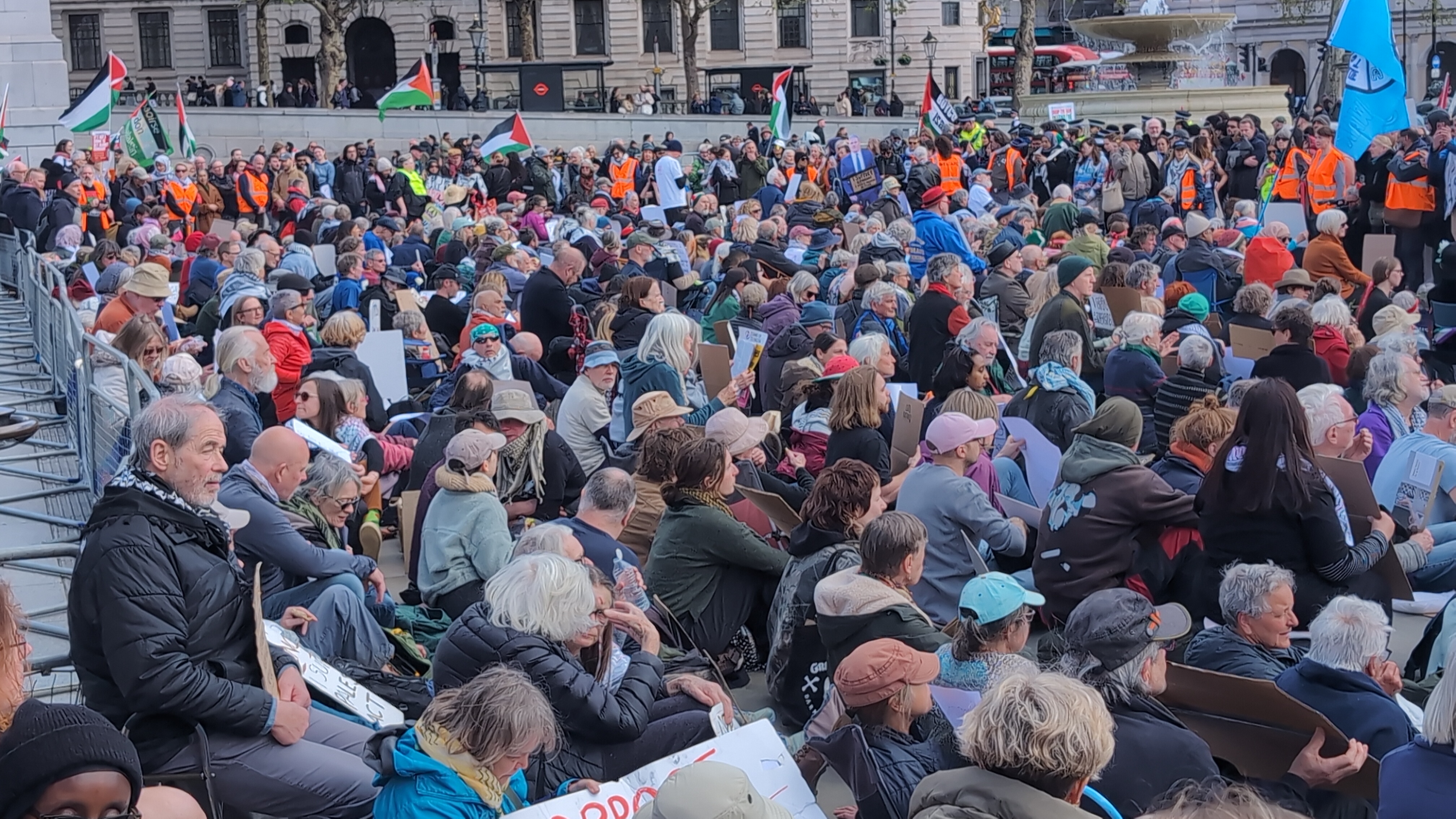
Photo: Discovery Analytical Resourcing
By its judgment rendered 13 February 2026, the High Court quashed the Home Secretary's order proscribing Palestine Action (PA), stayed subject to further representations regarding relief. The Secretary of State for the Home Department (SSHD) subsequently initiated an application to challenge the ruling.
Permission was granted on 26 February 2026 for a two-day hearing at the Royal Courts of Justice on 28-29 April 2026. The SSHD petitioned on two grounds:
▢ Appeal Ground 1 - that the Divisional Court erred in its interpretation and application of the SSHD's policy (ex Ground 6);
▢ Appeal Ground 2 - that the Divisional Court erred in approach and finding on the proportionality of the SSHD's proscription of Palestine Action (ex Ground 2).
Huda Ammori, as Respondent, applied for permission to cross-appeal the decision at judicial review to dismiss Ground 8 (i.e. the SSHD's failure in her duty to consult before PA's proscription) and the claim of unjustified interference with Article 14 rights under the European Convention of Human Rights (ECHR). These petitions were not then granted, although application subsequently entered for hearing and consideration at the appeal.
Statutory Scope
Again representing the SSHD, Sir James Eadie KC relied extensively on the primacy of the intent of Parliament as set down in the statutory framework established by the Terrorism Act 2000 (TA2K). Citing Supreme Court judgment R v. ABJ [2026] UKSC 8 [AB/49/1793] (§106), the range of provisions in the Act were claimed necessary to protect against the threat terrorism could pose to democratic society and public safety:
Judicial supervision, whether by domestic courts applying the Human Rights Act or by the European court applying the Convention, has to respect the institutional expertise and constitutional legitimacy underlying the judgment made by ... authorities by according them a correspondingly wide margin of appreciation.
The SSHD's Appeal relied upon respected breadth of margin extending to ancillary restrictive measures controlling passive support and selective expression featured in sections 11-13,TA2K. That such offences per se would not meet a definition of concerted 'terrorism' was not an anomaly in the drafting of the legislation.
Eadie reiterated that the Respondent did not challenge that PA was 'concerned-in-terrorism' under TA2K, drawing on aspects of the Divisional Court's judgment that questioned PA's 'non-violent character', 'lack of restraint' and motivation to commit criminal damage. Neither should the organisation's activities be described as 'civil disobedience', citing a Joint Terrorism Analysis Centre (JTAC) report detailing a modus operandi of 'unrestrained' property damage and alleged assaults conducted against police officers. Police intelligence submissions to the SSHD intimated that PA planned to escalate its activities.
Policy
Some initial uncertainty arose on the bench as to the degree to which the policy document could be said comprehensively to be treating policy matters. Eadie indicated the contents of a ministerial submission of 26 March 2025 as setting out the policy actually adopted, although Edis LJ noted that there would be no public access to such a document. Some ambiguity remained as to what should stand as the legally significant statement of policy.
The policy paper under review sets out directions as to the application of the SSHD's discretion in deciding proscription, articulating five essential factors:
(i) whether or not the nature and scale of the organisation’s activities justify proscription in the particular case;
(ii) whether or not the organisation poses a specific threat to the UK, or
(iii) to British Nationals overseas;
(iv) whether or not the organisation has a material presence in the UK; and
(v) whether or not proscription of the organisation would fulfil a particular need in supporting the global fight against terrorism.
Supplementary factors may enter into the analysis, provided that such 'other factors' are of the 'same nature' as the five specified.
Progressing Appeal Ground 1, Eadie objected to the Divisional Court's ruling that the SSHD's discretion with respect to other factors was implicitly limited in kind by the policy paper - nowhere was such a curb articulated verbatim by any of its provisions. The subsequent narrow interpretation, following eiusdem generis principles, resulted in an inappropriately legalistic and overly restrictive reading of key guidance criteria as if they formed "a statute or a contract". With such complex analysis, the Court risked drifting into the role of policymaker.
Eadie concurred with the view from the Bench that the five express factors identified by the policy, plus other relevant factors, demanded the SSHD's weighted evaluation, although disagreed with the Divisional Court that a particular need regarding proscription was a requisite preceding consideration. Moreover, requiring each of the discretionary factors to be of similar nature would impair the disruptive purpose driving the policy. Multiple hypothetical cases of the constraint operating on the SSHD's discretion were aired to demonstrate its potentially perverse interpretative consequences.
Abuse of Rights
The Appellant contested, as an error in law, the Divisional Court's ruling of inadmissibility of ECHR Article 17, claimed under Appeal Ground 2 (citing Roj TV A/S v. Denmark [2018] 67 EHRR SE8 §§30-38). On the basis that PA proved 'connected-in-terrorism' according to primary legislation, ECHR Articles 10 & 11 protections should not be available to the Respondent's case (for acts aimed at the 'destruction of Convention rights'). Lady Chief Justice Carr observed that the ministerial submissions to the SSHD had assessed the proportionality of interference with ECHR rights, implying that this view had not been considered germane ex ante. The Divisional Court also erred, it was countered, by ruling that interference with Convention rights had not been prescribed by law in view of a failure correctly to apply policy.
An additional branch of claim called on the Appeal Court to conduct a fresh proportionality assessment owing to the failure at judicial review to allow a proper degree of margin of appreciation concerning matters of national security and terrorism. The Divisional Court failed to give adequate weight to the range of expert advisers upon which the SSHD's competence relies. The Court's review of the 'level, scale and persistence' of PA activities failing to merit proscription was argued too narrow and at odds with authoritative precedent validating a broader perspective (Secretary of State for the Home Department v. Rehman [2003] 1 AC 153 [AB/13]; R (Begum) v. Special Immigration Appeals Commission [2021] AC 765 [AB/29]).
The Appellant also challenged the view that Article 10 & 11 rights of PA supporters - as opposed to direct activists - were substantially impinged in that TA2K had been designed to suffocate sympathy for proscribed organisations, yet that would not extend generally to Palestine solidarity. Although such supporters would awkwardly be characterised as 'terrorist' - in no respect advocating violence - it was claimed their interests had been taken into account and their number affected was relatively few.